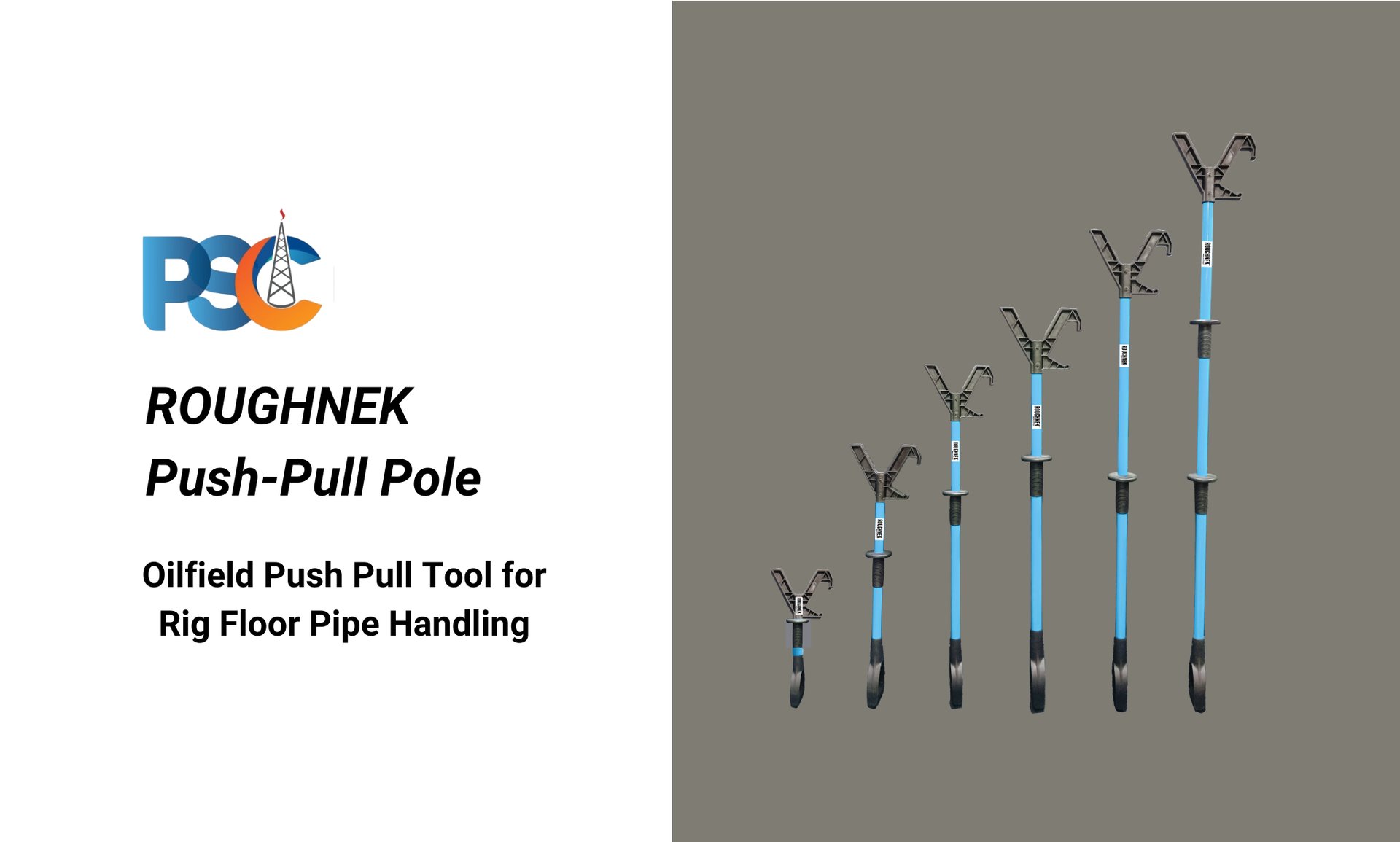
PSC ROUGHNEK Push-Pull Pole™
Oilfield Push Pull Pole Built for Rig Floor Pipe Handling
Why Oilfield PSC ROUGHNEK™ Push- Pull Pole
Oilfield Push Pull Pole Built for Rig Floor Pipe Handling Tools Are Critical for Rig Floor Pipe Handling
Rig floor operations are among the most hazardous environments in the oil & gas industry. Suspended drill pipes, casing, and tubulars are constantly moving, swinging, and rotating during operations.
In these high-risk conditions, even a small misalignment can result in serious injuries.
This is why the push pull pole has become an essential tool in modern oilfield safety.
The PSC ROUGHNEK™ is a heavy-duty push pull pole engineered specifically for rig floor pipe handling, allowing workers to guide and position loads safely—without direct hand contact.
The Reality of Rig Floor Hazards
Common Injury Mechanisms on Rig Floors:
Pinch points between tubulars and rotary table
Crush injuries between casing and rig deck
Finger amputations during manual alignment
Glove entanglement on sharp threads
Caught-between incidents during pipe movement
Most of these injuries occur when workers:
Manually guide suspended pipe
Attempt to stabilize swinging tubulars
Align connections by hand
Reach into red zones during hoisting operations
The rule across modern drilling safety standards is simple:
Hands must stay off suspended loads.
However, without proper tools, crews often rely on instinct and experience—placing hands dangerously close to moving iron.
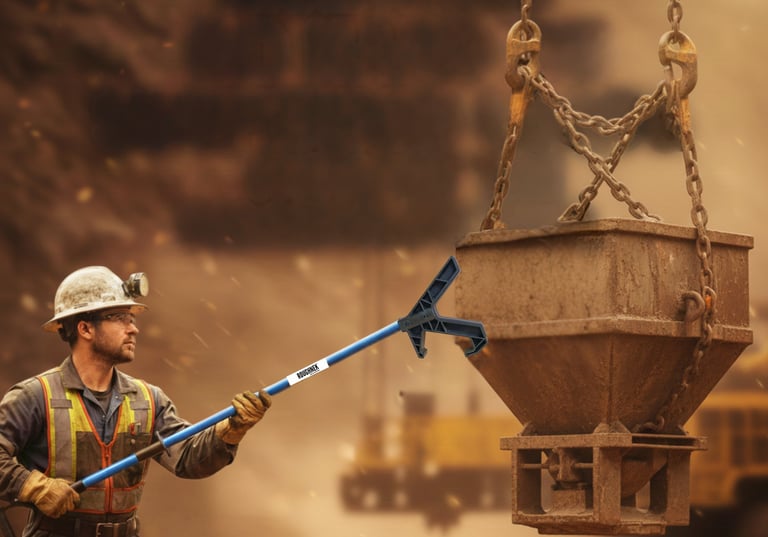
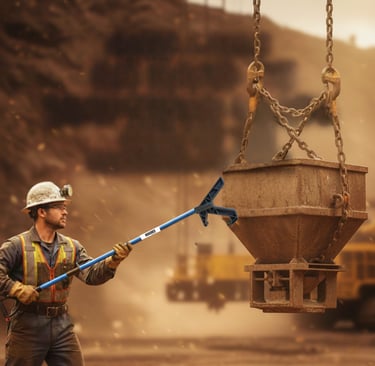
What Is PSC ROUGHNEK™ Push-Pull Pole Oilfield Push Pull Tool Built for Rig Floor Pipe Handling?
The PSC ROUGHNEK™ Push-Pull Tool is a heavy-duty oilfield push-pull device engineered specifically for rig floor pipe handling. It allows drill crews to:
Push
Pull
Guide
Align
Stabilize
drill pipe and casing from a safe working distance.
It acts as a controlled extension of the operator’s reach, removing hands and fingers from high-risk zones while maintaining full control over pipe positioning.
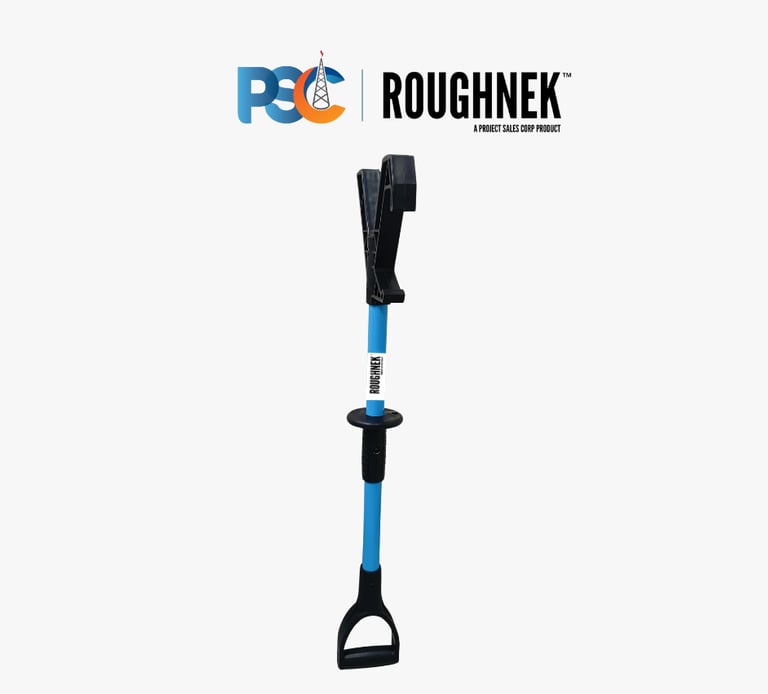
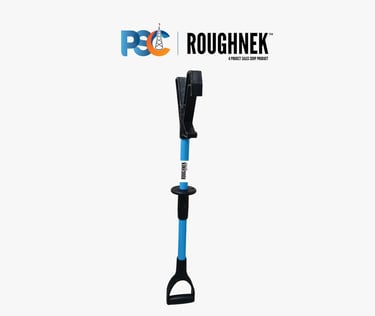
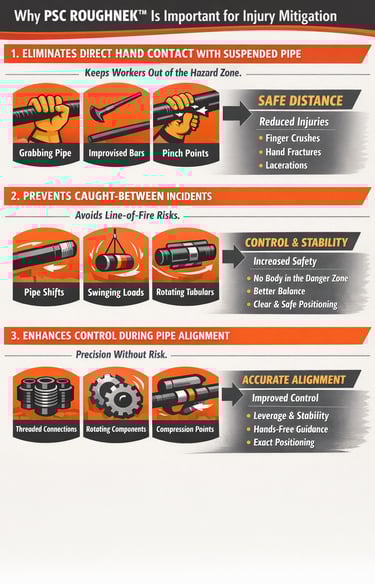
1. Eliminates Direct Hand Contact with Suspended Pipe
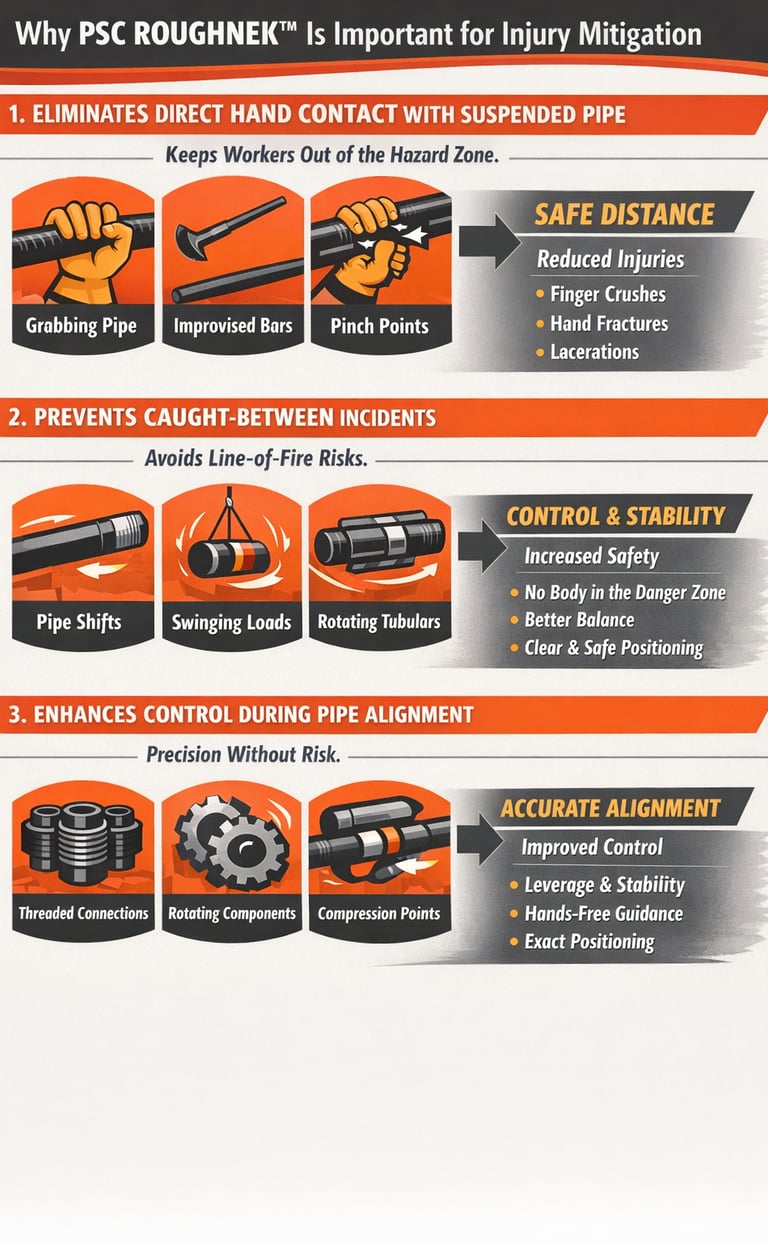
The primary function of the PSC ROUGHNEK™ push pull pole is to create safe distance between the worker and the hazard.
Instead of:
Grabbing pipe manually
Using improvised bars
Reaching near pinch points
Crews use a push pull pole to guide pipe safely from outside the red zone.
This significantly reduces:
Finger crush injuries
Hand fractures
Lacerations
2. Prevents Caught-Between Incidents
Caught-between injuries often occur when pipe movement is uncontrolled.
Without a push pull pole, workers are exposed when:
Pipe shifts unexpectedly
Loads swing during hoisting
Tubulars rotate during connection
The PSC ROUGHNEK™ push pull pole allows operators to:
Control pipe movement without body exposure
Maintain balance and stability
Avoid positioning between moving loads
By using a push pull pole, operators stay out of the line-of-fire zones.
3. Enhances Control During Pipe Alignment
During critical operations such as:
Stabbing
Thread engagement
Connection make-up
Precise alignment is required.
Manual guiding without a push pull pole exposes fingers to:
Threaded connections
Rotating components
Compression points
The PSC ROUGHNEK™ push pull pole provides:
Leverage
Stability
Controlled directional force
This ensures precision without exposing hands to risk.
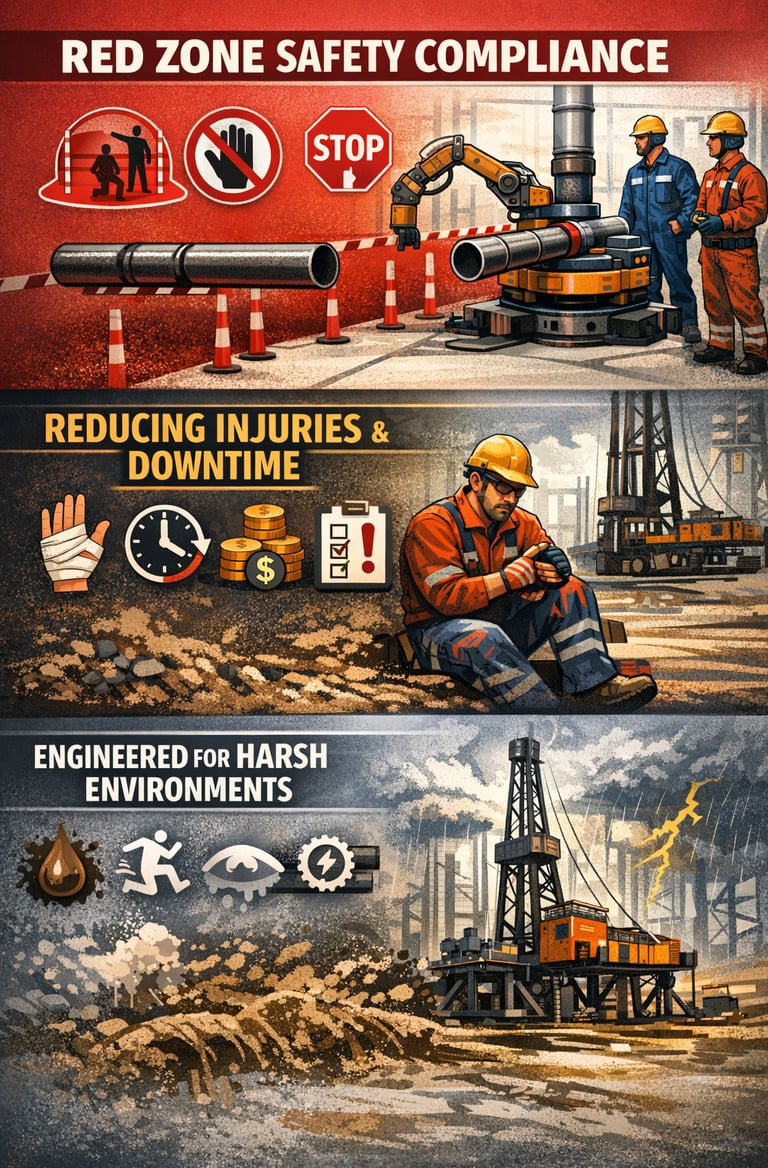
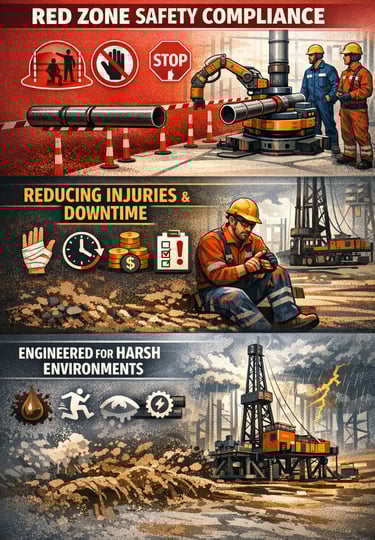
4. Supports Red Zone Safety Compliance
Modern drilling operations implement:
Red zone management systems
Hands-free policies
STOP-work authority
PSC ROUGHNEK™ supports compliance by:
Enabling hands-free pipe positioning
Reducing reliance on physical contact
Aligning with industry safety best practice
It becomes a proactive safety control, not just a tool.
5. Reduces Lost Time Incidents
Hand injuries are among the most frequent incidents in oilfield operations.
Without a push pull pole, these incidents include:
OSHA recordables
Medical treatment cases
Lost-time injuries
These lead to:
Downtime
Crew shortages
Increased insurance costs
Regulatory pressure
Using a push pull pole:
Reduces exposure frequency
Lowers injury probability
Improves operational continuity
6. Engineering Importance in Harsh Environments
Rig floor conditions are challenging and unpredictable:
Mud contamination
Slippery surfaces
Limited visibility
Heavy vibration
Dynamic loads
The PSC ROUGHNEK™ push pull pole is engineered to:
Withstand industrial abuse
Deliver high structural strength
Maintain grip and control
Perform reliably in extreme conditions
A durable push pull pole ensures consistent safety performance across operations.
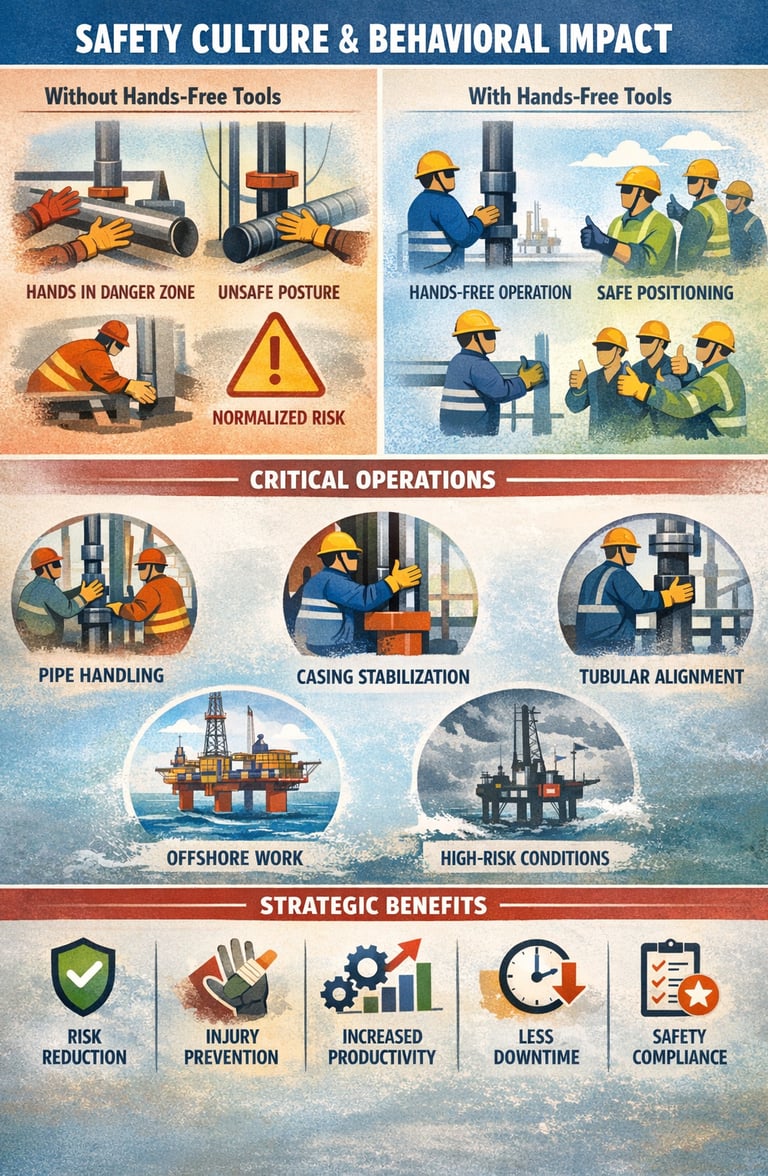
7. Safety Culture & Behavioral Impact
Tools influence behavior on the rig floor.
Without a push pull pole:
Workers rely on habit
Hands enter unsafe zones
Risk becomes normalized
With the PSC ROUGHNEK™ push pull pole:
Hands-free handling becomes standard
Safe positioning becomes routine
Crew confidence improves
The push pull pole reinforces a safety culture where risk is engineered out of the task.
8. Operational Scenarios Where Push Pull Pole Is Critical
The PSC ROUGHNEK™ push pull pole is essential in:
Guiding drill pipe into the rotary table
Stabilizing casing during stabbing
Positioning tubulars during tripping
Adjusting pipe alignment on workover rigs
Managing pipe on offshore platforms
Handling loads in high wind or unstable conditions
In each case, the push pull pole reduces direct human exposure to moving loads.
9. Strategic Importance for Oil & Gas Operators
For drilling contractors and operators, implementing a push pull pole delivers:
✔ Risk reduction
✔ Injury prevention
✔ Compliance with safety standards
✔ Improved productivity
✔ Reduced downtime
✔ Stronger safety performance metrics
In high-risk drilling environments, even one prevented injury justifies the use of a push pull pole.




Why PSC ROUGHNEK™ Push-Pull Pole Oilfield Push Pull Tool Built for Rig Floor Pipe Handling Is Important for Injury Mitigation
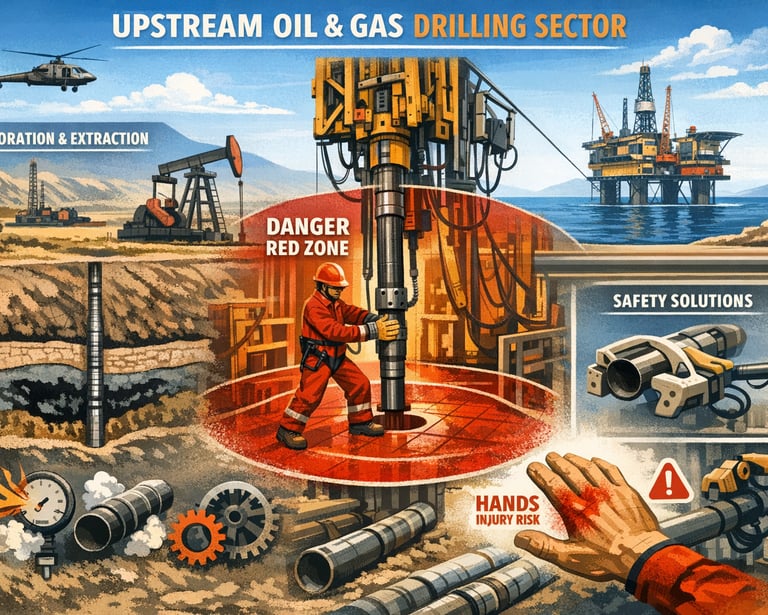
Understanding the Upstream Oil & Gas – Drilling Sector
The upstream oil & gas sector focuses on exploration and production, including drilling and extracting crude oil and natural gas.
Drilling operations are highly hazardous, involving suspended loads, rotating equipment, and confined red zones—where hand and finger injuries are common during pipe handling.
In these conditions, a push pull pole is essential. It allows workers to guide and position tubulars from a safe distance, reducing exposure to pinch, crush, and caught-between hazards.
Tools like the PSC ROUGHNEK™ push pull pole help eliminate direct hand contact with suspended loads, improving safety and control on the rig floor.
The increasing use of push pull pole systems reflects a shift toward engineered safety—where risks are reduced by design, not just behavior.
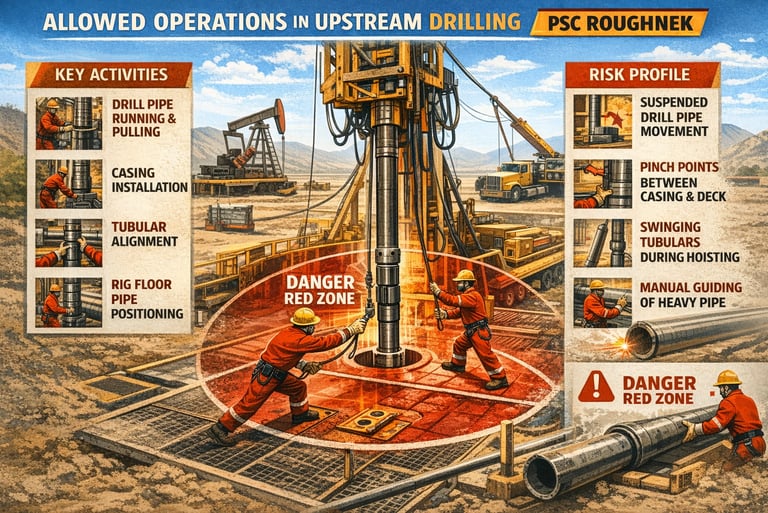
Allowed Operations in Upstrem Drilling
PSC ROUGHNEK™ push pull pole is essential in onshore drilling, where pipe movement and alignment are high-risk tasks.
Onshore Drilling Rigs:
Operational Overview
Onshore drilling rigs are land-based installations used for exploratory and production wells. These rigs vary from small truck-mounted units to large, high-capacity rotary rigs capable of deep drilling.
Key Activities:
Drill pipe handling
Casing installation
Tubular alignment
Rig floor positioning
Risk Profile:
Suspended loads
Pinch and crush points
Swinging tubulars
Manual pipe guiding
A push pull pole allows safe, hands-free pipe handling from a distance—reducing exposure to red zone hazards and improving control on the rig floor.
Relevance of PSC ROUGHNEK Push-Pull Pole Oilfield Push Pull Tool Built for Rig Floor Pipe Handling:
The PSC ROUGHNEK is engineered to allow safe pipe positioning without placing hands near suspended loads. It enables:
Controlled push-pull movement of tubulars
Safe pipe alignment from a distance
Reduced hand injury exposure
Compliance with “Hands Off Suspended Loads” policies
Onshore drilling operations benefit from tools that increase control while maintaining crew safety, particularly in high-frequency tripping operations.
Operational Overview:
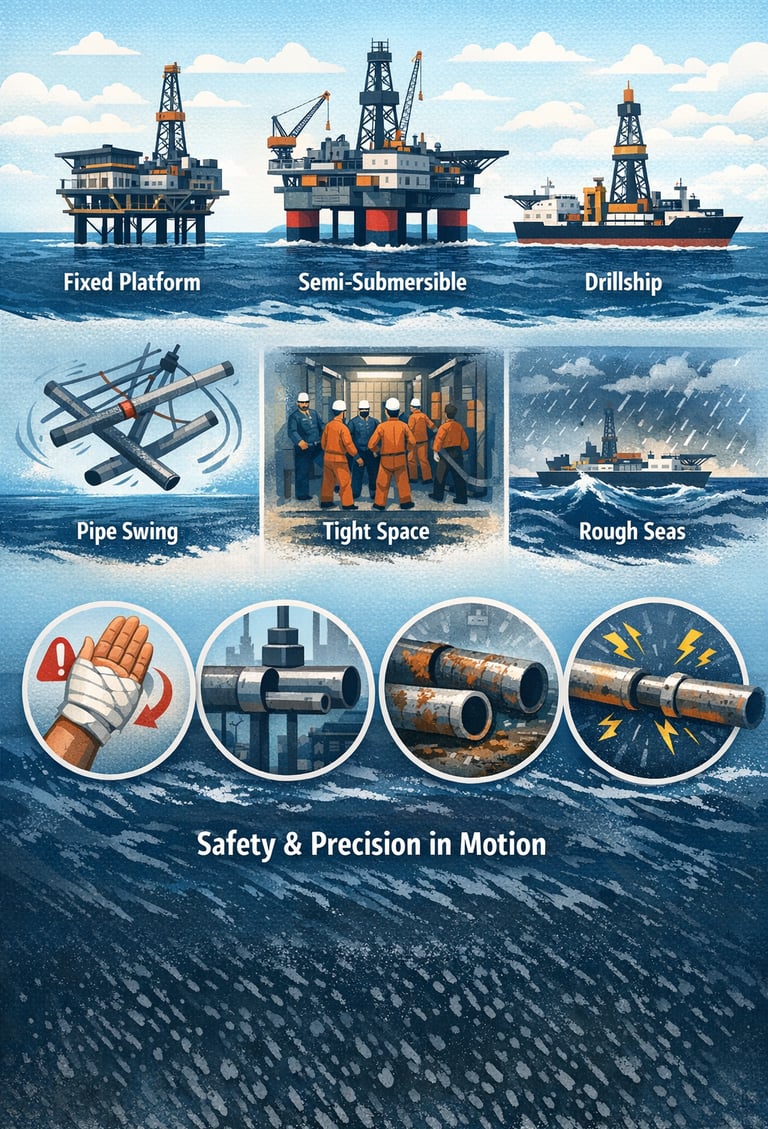
Offshore drilling rigs operate in marine environments and include:
Fixed platforms
Semi-submersibles
Drillships
These environments introduce additional challenges such as vessel motion, space constraints, and corrosive saltwater exposure.
Risk Factors:
Dynamic pipe swing due to wave motion
Limited rig floor space
Weather-related instability
Corrosion impact on equipment
Pipe handling offshore requires enhanced control due to environmental movement. A minor misalignment can escalate quickly under dynamic load conditions.
Role of PSC ROUGHNEK Push-Pull Pole Oilfield Push Pull Tool Built for Rig Floor Pipe Handling Offshore:
PSC ROUGHNEK contributes to:
Stabilizing tubulars in moving environments
Maintaining operator distance from pinch zones
Reducing slip and grip failure risks
Enhancing control in confined rig floor spaces
Its heavy-duty industrial construction is suitable for corrosive offshore conditions where durability is critical.
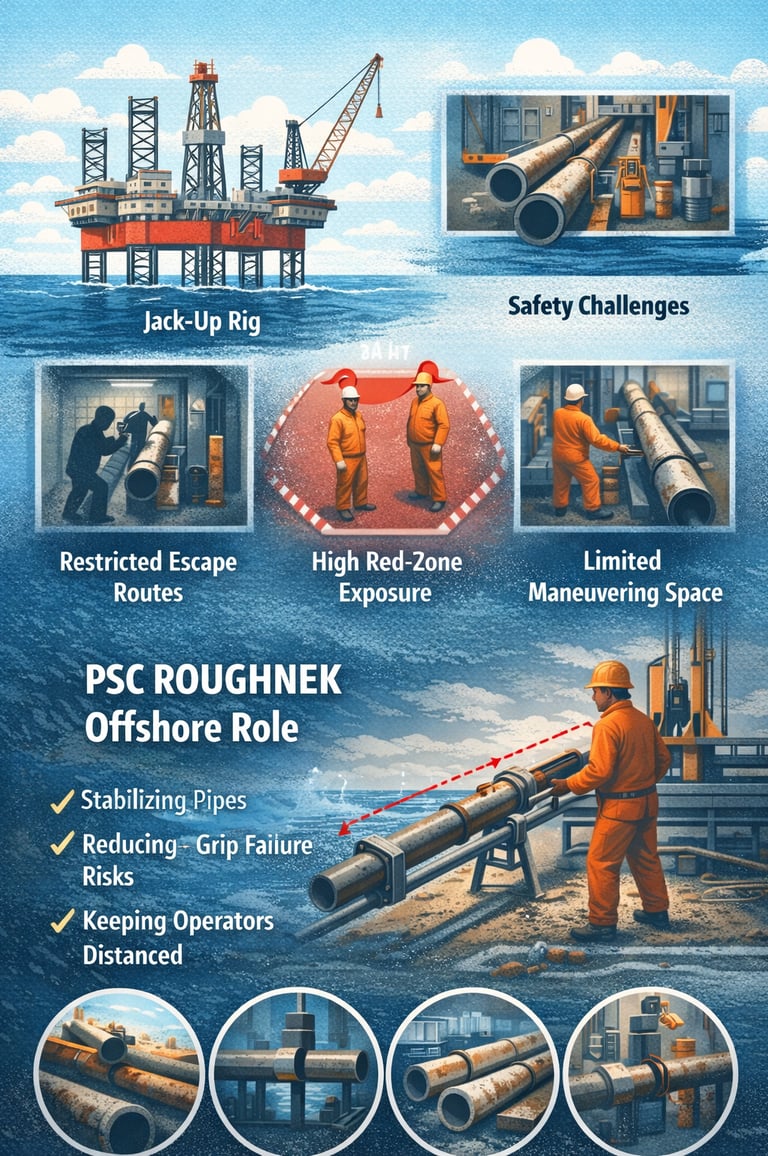
. Jack-Up Rigs
Operational Overview
Jack-up rigs are mobile offshore units that elevate above sea level using extendable legs. They are widely used in shallow water drilling operations.
Operational Characteristics:
Elevated working deck
Compact rig floor layout
Frequent casing and drill pipe handling
High reliance on crane and hoisting systems
Due to spatial limitations, manual pipe guidance risks increase significantly.
Safety Challenges:
Restricted escape routes
High red-zone exposure
Limited maneuvering space

PSC ROUGHNEK Push-Pull Pole
Oilfield Push Pull Tool Built for Rig
Floor Pipe Handling in Jack-Up
Operations:
PSC ROUGHNEK allows:
Controlled tubular movement in confined decks
Safer casing alignment
Reduced manual contact with suspended pipe
Improved ergonomic control during positioning
By removing hands from direct pipe contact, the tool supports safer drilling cycles in compact offshore units.
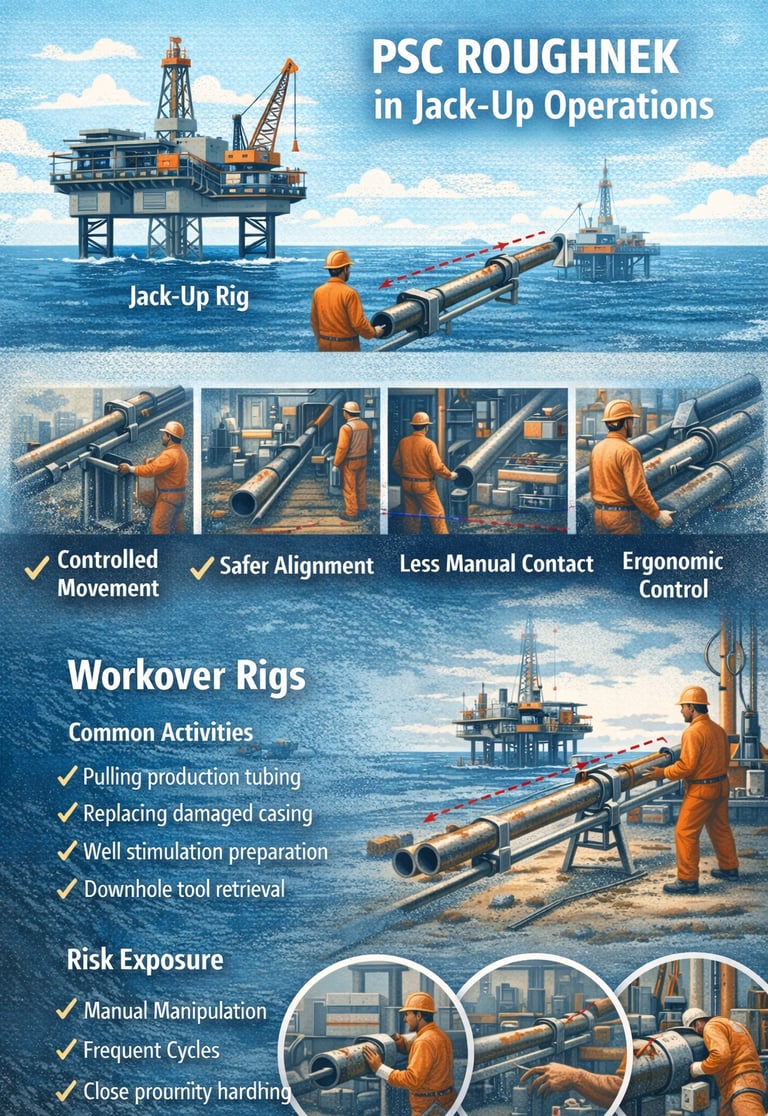
Workover Rigs
Operational Overview
Workover rigs are used for well intervention, maintenance, repair, and re-completion. Unlike drilling rigs, they focus on servicing existing wells.
Common Activities:
Pulling production tubing
Replacing damaged casing
Well stimulation preparation
Downhole tool retrieval
These operations often involve repetitive pipe handling in tight spaces.
Risk Exposure:
Manual tubing manipulation
Frequent lifting and lowering cycles
Close-proximity handling
In workover operations, speed often increases injury risk. Crew fatigue can contribute to unsafe manual positioning.

PSC ROUGHNEK Push-Pull Pole Oilfield Push Pull Tool Built for Rig Floor Pipe Handling Application:
PSC ROUGHNEK enhances:
Hands-free pipe control
Safe tubing alignment
Reduced crush injury exposure
Operational efficiency during repetitive cycles
Its use supports injury prevention programs in high-frequency intervention environments.
Rig Floor Pipe & Casing Handling
Critical Area: The Red Zone
The rig floor is the most hazardous zone in drilling operations. It involves:
Rotary table movement
Suspended drill string
Iron roughnecks
Elevators and slips
Casing stabbing operations
Most hand injuries in upstream drilling occur during:
Pipe stabbing
Tubular alignment
Casing positioning
Manual push-pull adjustments
The industry standard safety rule is clear:
Hands should never be placed on suspended loads.
Why PSC ROUGHNEK Push-Pull Pole Oilfield Push Pull Tool Built for Rig Floor Pipe Handling Is Critical in These Operations
PSC ROUGHNEK is specifically engineered for rig floor pipe handling in upstream oil & gas drilling. Its purpose aligns directly with the operational hazards present in:
Onshore rigs
Offshore rigs
Jack-up rigs
Workover rigs
High-risk red-zone pipe handling
Industrial Safety Impact:
Minimizes pinch-point injuries
Reduces crush and caught-between incidents
Supports compliance with global safety standards
Enhances crew confidence during pipe movement
Operational Benefits:
Improved pipe control
Faster alignment and positioning
Reduced downtime from injuries
Increased efficiency in tripping and casing operations
Industry Safety Regulations & Standards
Upstream drilling operations are governed by strict safety frameworks, including:
OSHA (Occupational Safety and Health Administration)
IADC (International Association of Drilling Contractors)
API (American Petroleum Institute) standards
Company-specific red-zone management systems
Modern drilling companies implement:
Hands-off policies
Engineered safety controls
Red-zone monitoring
Mechanical handling aids
PSC ROUGHNEK fits within this engineered control hierarchy by eliminating direct human exposure to hazardous moving iron.
Engineering Requirements in Upstream Drilling Tools
Tools used in upstream drilling must withstand:
High-impact loads
Extreme temperature variations
Abrasive environments
Corrosion exposure
Continuous mechanical stress
PSC ROUGHNEK is designed to meet these operational demands while maintaining structural integrity and ergonomic usability.
Conclusion
The PSC ROUGHNEK™ Push-Pull Tool is not just a rig floor accessory—it is a critical safety control in upstream oil & gas drilling operations.
By removing hands from suspended loads and eliminating exposure to pinch and crush zones, it significantly mitigates:
Hand injuries
Finger amputations
Caught-between incidents
Red zone exposure risks
In a workplace where moving iron never waits, engineered distance equals safety.
PSC ROUGHNEK™ transforms pipe handling from a high-risk manual activity into a controlled, hands-free operation—protecting crews while maintaining operational efficiency.
Upgrade To PSC ROUGHNEK Push-Pull pole Oilfiled Push Pull Tool Built for Rig Floor Pipe Handling .
📞 Call us now: +919100932334
📧 Email: info@projectsalescorp.com
🌐 Visit: pschandsfree.com
3A, 3rd floor, Founta Plaza, Suryabagh, Visakhapatnam-530020. AP India
+919100932334
info@projectsalescorp.com
pschandsfree.com
Dubai Silicon Oasis, Building A1,IFZA Business park, DDP, Dubai, United Arab Emirates
(+971) 50-457-2844
info@oscdubai.com
pscdubai.com


134 Vintage Park Blvd, Ste A #1006, Houston, TX 77070
(984) 322-1807
info@pschoustonllc.com
pschoustonllc.com